
Apr 10, 2008: Oyster Conformation
The ideal oyster is cup-shaped with a wide, fluted edge tapering towards the hinge. Healthy, growing oysters are very fluted and frequently very colorful, whereas an oyster that's starting to atrophy will have rounded, colorless edges. 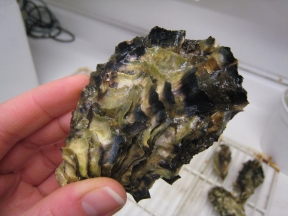
The oyster above was one of three dozen in a package we shipped to California yesterday. In our humble opinion, April is the friendliest oyster month: the water is still cold enough so that the oyster meat is really firm, but it's starting to warm up just enough to let them feed and grow. A well-shaped oyster is more than good looks; if you want to see what's actually going on inside those oyster shells, here's a quick anatomy lesson. No matter the shell shape, this oyster shucker will get the job done.
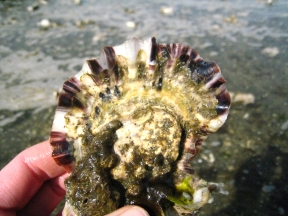
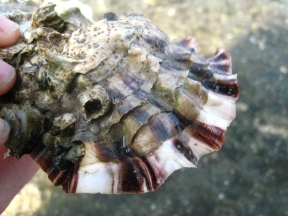
These are amazingly beautiful, right? Even to people who aren't obsessed with oysters?
Oysters can get long and skinny when they're grown too close together, and so grow upright like trees in order to access more nutrients. They don't necessarily taste worse than a cup-shaped oyster, but they're definitely more difficult to eat raw. Shell shape gets especially interesting when you compare different species, including the famously tidy little kumamoto oysters.

Samson Von Puddly illustrating poor oyster conformation.
7 comments
[…] fast the oyster grows and how much space it’s been given to grow. Confirmed by Lissa James of Hama Hama Oyster Company, an oyster’s growth rate is a function of water temperature and food availability. The more […]
[…] if an oyster is growing too quickly or in crowded conditions, it can get long and skinny. We have quite a few of these so-called “bananas” on our beach, remnants from the days […]